
The IFMIF-DONES will turn the Andalusian province into a European energy capital.
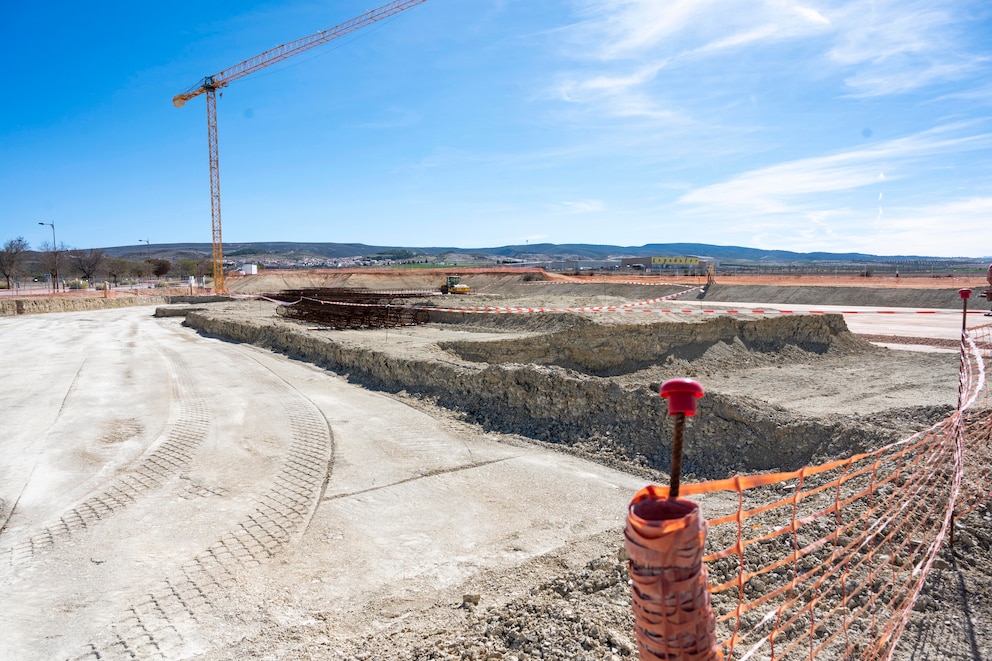
Land where the particle accelerator will be located in Escúzar. (EFE/Miguel Ángel Molina)
Granada to Become One of the World’s Energy Capitals
Granada is set to become one of the world’s energy capitals. The Andalusian city has been chosen to host a highly ambitious project that could transform Spain’s scientific impact: a particle accelerator, one of the most significant recent scientific advances.
It has been recognized globally as one of the most important infrastructures of its kind, and its impact on scientific progress is expected to be enormous. It will be located in Escúzar, a town in the province of Granada. The project requires an investment of €800 million and will receive financial support from other countries.
Construction is set to begin in just over a month, with the involvement of multiple governments and the University of Granada. Additionally, the European Union will join the project, contributing a quarter of the total investment due to its innovative potential.
Purpose of the Particle Accelerator
The goal of IFMIF-DONES (International Fusion Materials Irradiation Facility – Demo Oriented Neutron Source) is to develop the materials needed for future nuclear fusion reactors. The aim is to produce energy from these reactors while consuming less energy than is required to generate it.
Therefore, the project’s task is to design, test, and validate the components of future nuclear fusion power plants. This could make Granada a leading center in the pursuit of clean and unlimited energy. However, its impact goes beyond just this goal.
The accelerator could also have applications across various scientific fields. Areas such as physics and medicine stand to benefit greatly from this powerful tool, enabling major advancements. In this way, its effects will be far-reaching and will foster innovation in many sectors.
Impact on Granada
Granada was chosen for several reasons. It has the necessary infrastructure and space, thanks to the location and size of the selected land. The project will also have a major socioeconomic impact on the province, with the University of Granada playing a key role.
This Andalusian province is hosting a project that, beyond positioning it at the forefront of global science, is expected to bring widespread positive change. The Government Delegate in Andalusia, Pedro Fernández, has praised the arrival of the particle accelerator and its anticipated impact.
To begin with, Fernández stated that the project will create around 11,000 highly skilled jobs, which is great news in light of Spain’s ongoing difficulty retaining national scientific talent. This initiative will help keep Spanish specialists in the country and attract international experts.
The project is funded by the Central Government and the Regional Government of Andalusia, with additional support from other countries and the European Union. Croatia will cover 5% of the required investment. The University of Granada is also involved, which could enhance its prestige and attract more students and professionals.
On May 19, Science Minister Diana Morant will lay the first stone of the IFMIF-DONES particle accelerator in Escúzar. It will be the largest scientific investment in Spain’s history, and one of the most significant in Europe, positioning Granada as a global reference in energy science.