
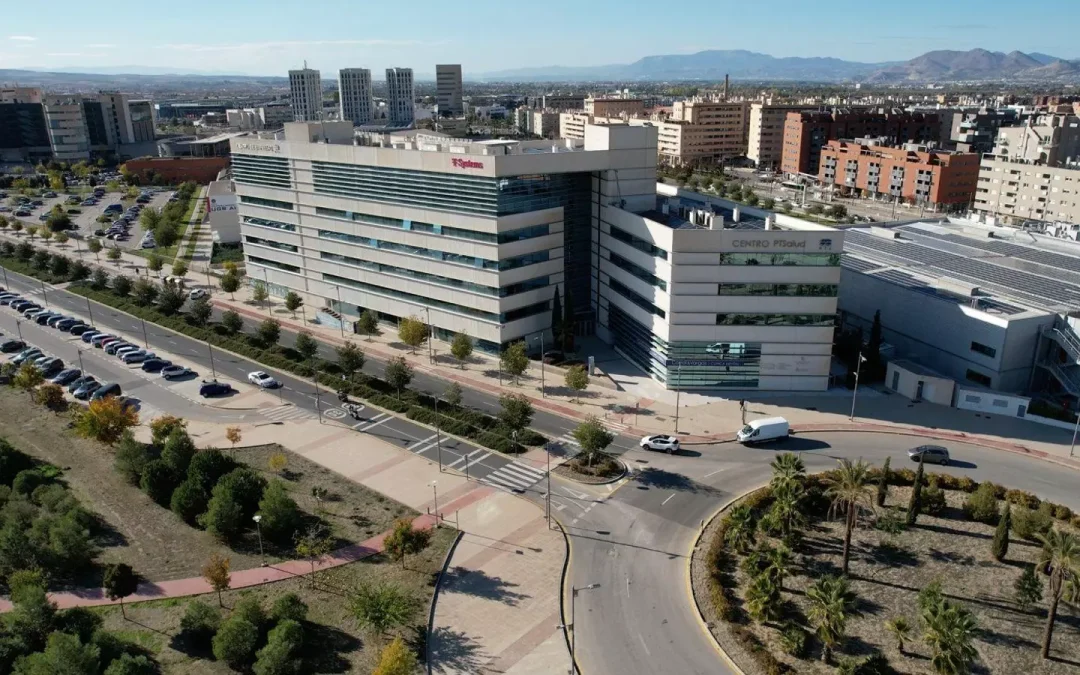
The Andalusian Government also highlights the IFMIF-DONES project and the international nature of the University of Granada (UGR), while emphasizing the rail and road connections with the rest of the country.
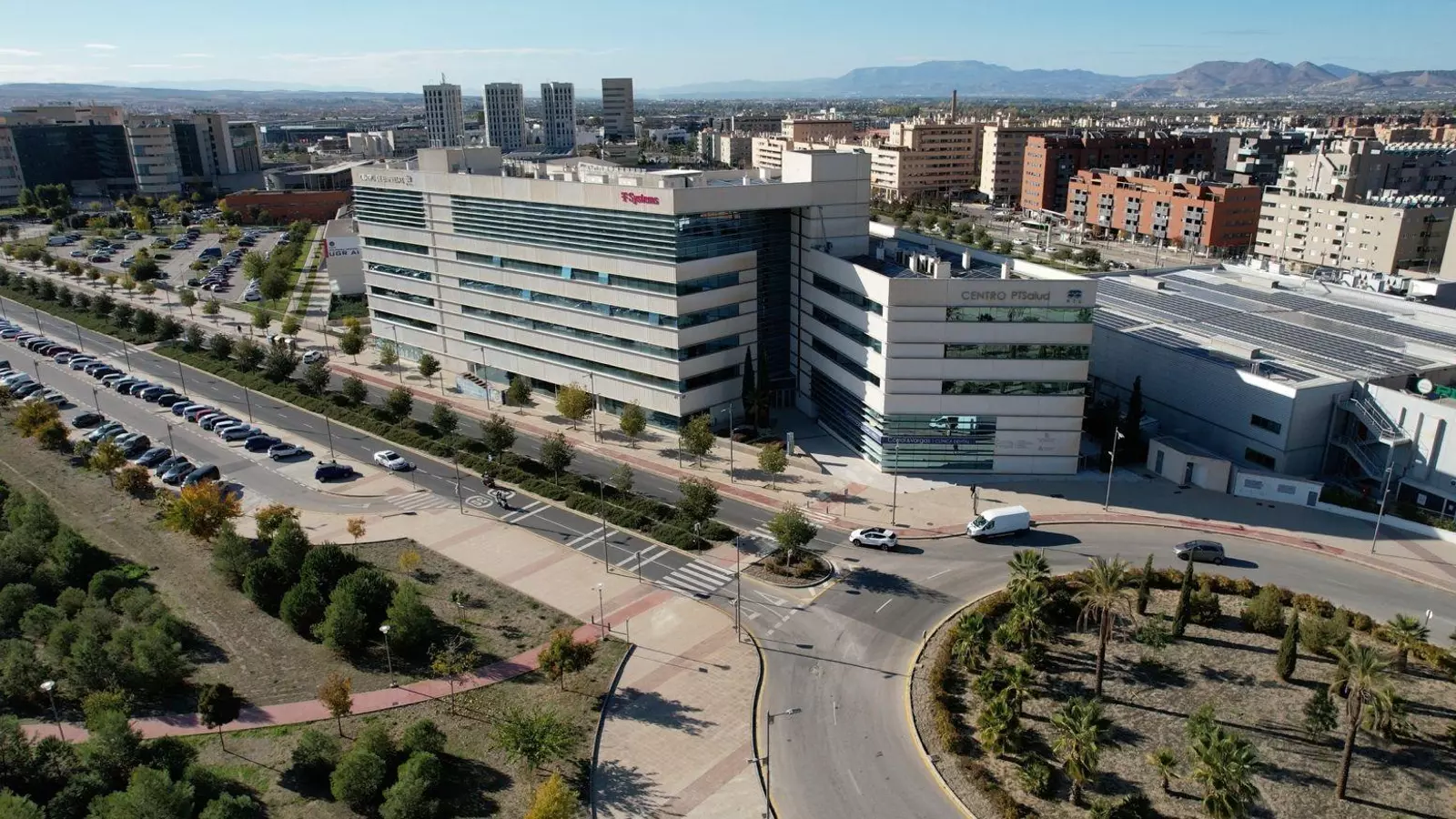
Archivo image of the PTS (Health Technology Park) area in Granada.
The Andalusian Government and its president, Juanma Moreno, presented on Monday at the Reina Sofía Center in Madrid the project “Andalusia, where everything begins” to encourage foreign companies to invest in and establish themselves in the autonomous community. During the event, a report was reviewed, based on data available at the end of October 2024, highlighting the strengths of each province. Granada is also featured in this strategy, standing out as a reference in the fields of biotechnology and health, Artificial Intelligence (AI), and other aspects such as the future particle accelerator, the strength of the University of Granada (UGR), and the province’s road and rail connections.
Before addressing the region’s strengths, however, the data paints a broader picture. Granada is home to a total of 152 companies with foreign capital, accounting for 4.8% of the 3,171 foreign-owned companies established in Andalusia. This places Granada fourth among the eight Andalusian provinces, with the neighboring province of Málaga leading the ranking with no less than 10,758 companies, or 55.8% of the regional total. Ahead of Granada are also Seville (614 foreign companies, 19.5%) and Cádiz (301, 9.5%). Closely behind Granada is the neighboring province of Almería (128 foreign companies, 4.1%), followed by Córdoba (92, 2.9%), Huelva (77, 2.4%), and finally Jaén (30, 1%).
But the key question is clear: “Why invest in Granada?” The Andalusian Government emphasizes that, within the region’s diversified economy, Granada stands out for its cutting-edge biotechnology and health ecosystem, noting that the development of Information and Communication Technologies (ICT) is also transforming Granada’s regional economy. Within this broader context, particular attention is given to the Health Technology Park (PTS), the Andalusian Center for Artificial Intelligence—which is set to open in November and will include a space to promote quantum computing—and the IFMIF-DONES particle accelerator, heralded as the future of energy.
The PTS, AI, and the Particle Accelerator: Key Assets
“Andalusia’s research infrastructure represents a unique strategic asset in Spain. The Health Technology Park of Granada is the country’s first park specialized in life sciences, and it hosts the Functional Food Research and Development Center (CIDAF),” the report highlights. It also mentions the Genyo Center for Clinical Genetics and Genomics, various health research institutes, and initiatives such as AcexHealth, Andalusia’s health-focused startup accelerator based in the PTS.
In this way, the Andalusian Government positions Granada as a reference point for the medical and biotechnology sectors. Multinational companies are already established in the area, and an expected future expansion of the PTS could attract even more firms of this type.
Regarding the development of new technologies and ICT in Granada, the Government highlights the presence of both companies and experts in the region. “The area has qualified professionals in software development, artificial intelligence, cybersecurity, data analysis, and other critical technologies. This is reflected in the influx of technology and innovation centers from multinational companies that in recent years have set up operations in cities such as Málaga, Granada, and Seville.”
Within this context, particular mention is made of the Andalusian Center for Artificial Intelligence, located in Granada. This is a pioneering initiative driven by the regional government, aiming to be the cornerstone for implementing the Andalusian Artificial Intelligence Strategy 2030. “Its goals include positioning Andalusia at the forefront of AI technology in Europe, improving the competitiveness and positioning of the productive business fabric through the use and development of AI, increasing trust in AI and setting an example through responsible and ethical use within the public sector, and promoting AI use in government administration.”
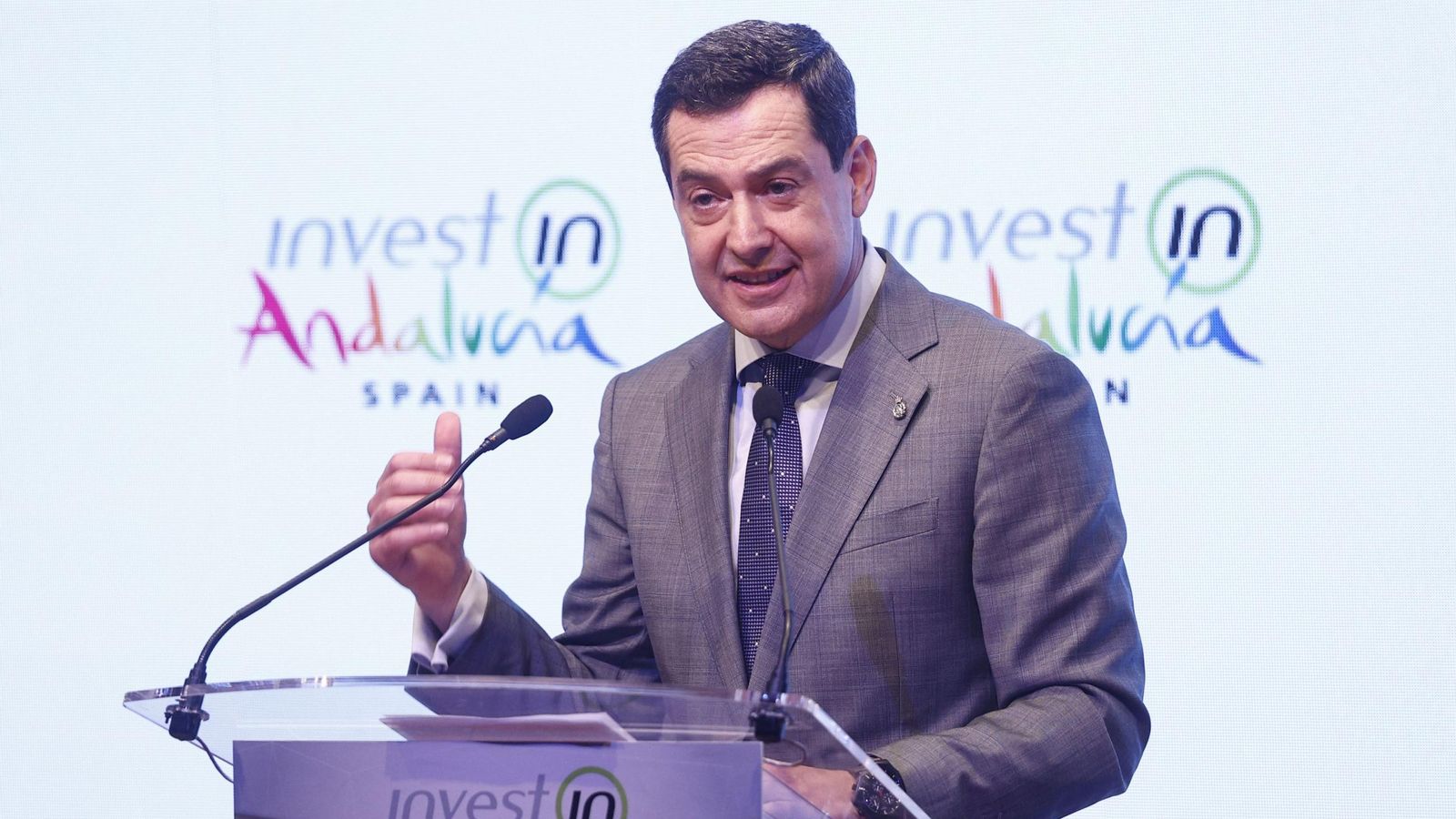
The President of the Regional Government, Juanma Moreno, during the presentation of the campaign to attract foreign investment.
There is also a section dedicated to the International Fusion Materials Irradiation Facility – Demo Oriented Neutron Source, known as IFMIF-DONES, “a high-relevance scientific project that will be established in Granada and will focus on the research and development of advanced materials for future nuclear fusion reactors.” By focusing on fusion energy, IFMIF-DONES places Granada and Andalusia at the forefront of global science, contributing to progress toward cleaner and more sustainable energy sources. The report also highlights that the project involves collaboration with high-level scientific and technological institutions, fostering the development of knowledge and capabilities in the field of nuclear fusion energy.
Finally, as another key strength of the province, the report also makes a notable reference to the potential of the University of Granada. “In 2022, Spain received nearly 143,000 European students for part of their education, with the University of Granada standing out as the top recipient nationwide,” the report states. This is intended to demonstrate to companies the region’s strong ability to attract talent.
The Port of Motril, Left Out
Among the characteristics of the territory, the report highlights that Granada has a strong road network, with the A-92, A-44, and A-7 highways connecting the province to the rest of Andalusia and the country; that it is part of the high-speed rail system, with a connection to Madrid in just three and a half hours; and that it has its own airport with international connections (currently only to Paris and Amsterdam). However, the report overlooks the Port of Motril as a key logistics and transport hub.
The report notes that Andalusia “complements its geostrategic location and extensive coastline with a large port network, including some of the most important ports in the Mediterranean and the Atlantic.” The study mentions that the region has eight state-owned ports, seven commercial ports, 20 fishing ports, and 39 marinas, but when listing them, it only cites the ports of Algeciras, Huelva, Seville, Cádiz, and Málaga, completely omitting both Motril and Almería.
The report concludes by noting that, although the information and analysis presented have been prepared to a high standard, “the report is intended solely for general informational purposes and should not be considered accounting, tax, legal, or other professional advice. Please consult our experts for specific guidance.”